Choosing molecular diagnostic equipment certifications is not a paperwork exercise. It affects assay reliability, operator safety, market access, and maintenance costs. In daily laboratory work, a certificate must connect with real evidence: calibration records, software controls, traceable materials, and documented training.
The World Health Organization’s Global Genomic Surveillance Strategy emphasizes standardized workflows, quality systems, and comparable laboratory results. Its guidance shows why certification decisions should support the entire testing pathway, not only the instrument. The ISO Survey also demonstrates the continuing global importance of formal management-system certification, including ISO 13485 for medical-device manufacturers. However, ISO 13485 alone does not prove that a platform performs every molecular assay correctly.
So, what certifications are important for molecular diagnostic equipment? The answer depends on the intended market and device role. ISO 13485 supports controlled design and manufacturing. ISO 14971 addresses medical-device risk management. IEC 61010-1 supports electrical laboratory equipment safety, while IEC 61326-1 addresses electromagnetic compatibility. Clinical laboratories may also consider ISO 15189, especially when equipment integrates with accredited testing processes.
Regulatory clearance matters too. The U.S. FDA may require 510(k), De Novo, or another applicable pathway. European sales may involve CE marking under the In Vitro Diagnostic Regulation. These are not interchangeable certificates. A supplier’s brochure can blur that distinction.
Look for independent test reports, current certificates, scope statements, and post-market support. Ask who issued each document. Check its expiration date. A missing software version can change the assessment. This is easy to overlook.
There is no universal checklist. A practical choice combines the destination country, intended use, sample type, cybersecurity needs, and laboratory quality system. Even experienced buyers may miss one dependency. That uncertainty deserves review before purchase.
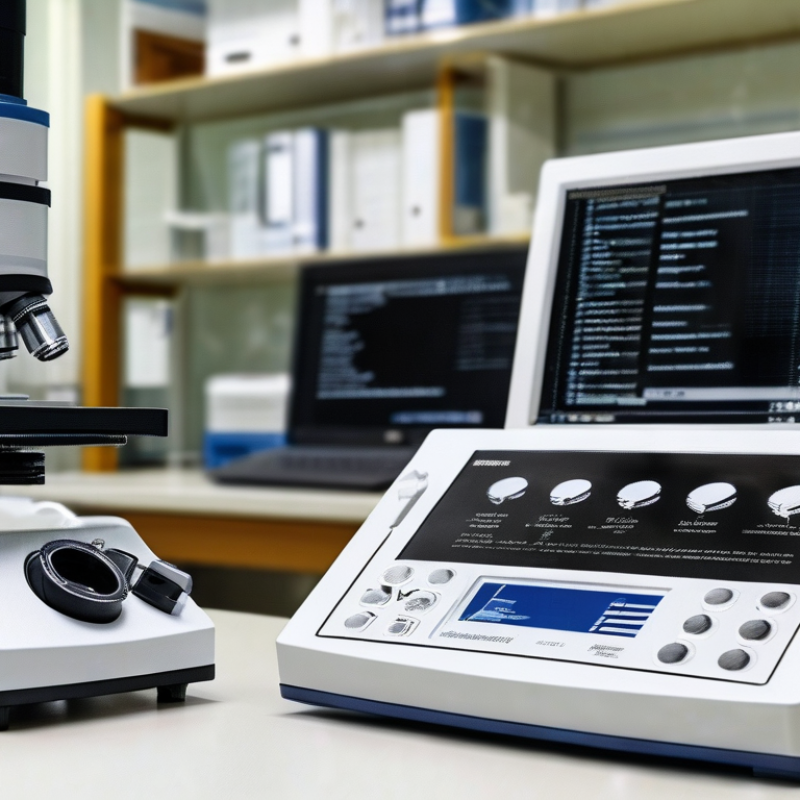
How to Choose Molecular Diagnostic Equipment Certifications?
Define the Certification Scope for Molecular Diagnostic Equipment
Certification begins with a precise scope, not a logo or a certificate number. Define the intended use, specimen types, target analytes, throughput, software functions, and operating environment. A nucleic acid extractor for blood samples needs a different scope from a system handling respiratory swabs. The scope should also identify accessories, consumables, and connected instruments. Otherwise, the certificate may cover only the central device, leaving important workflow risks unexamined.
Relevant standards can include ISO 13485 for quality management, IEC 61010-1 for laboratory equipment safety, and IEC 61326-1 for electromagnetic compatibility. ISO 15189 is important when equipment supports medical laboratory services. The ISO Survey 2022 reported more than 31,000 ISO 13485 certificates worldwide. That number shows broad adoption, but it does not prove that every certificate covers your intended application. ECDC reports that antimicrobial resistance causes over 35,000 deaths annually in the European Union and European Economic Area. Therefore, resistance-related testing may require especially clear performance and data-traceability boundaries. A tidy scope can still miss a critical detail.
Tips: Write the scope before selecting a certification route. List every specimen and intended user. Confirm whether software updates change the certified configuration. Ask for evidence linking each test claim to validation data. Certification is not the same as regulatory authorization. That distinction is easy to overlook.
Define the certification scope by mapping the equipment’s electrical safety, electromagnetic compatibility, software, risk management, quality management, and in vitro diagnostic regulatory requirements. The chart shows the publication year of widely referenced frameworks that may be relevant when building this scope.
References: ISO 13485:2016; ISO 14971:2019; IEC 61010-1:2010 with Amendment 1:2016; IEC 61326-1:2020; IEC 62304:2006 with Amendment 1:2015; Regulation (EU) 2017/746.
Choosing molecular diagnostic equipment certifications starts with the intended use, not the certificate displayed on the cabinet. Define the specimen type, target analytes, testing environment, and patient-risk level. Then map those requirements to applicable regulations and standards. ISO 13485 supports a medical-device quality management system, while ISO 15189 focuses on laboratory competence. IEC 61010-1 addresses electrical safety, and IEC 61326-1 covers electromagnetic compatibility. These standards overlap, but they are not interchangeable.
The Lancet Commission on Diagnostics reported in 2021 that approximately 47% of people worldwide had little or no access to diagnostics. That figure makes dependable equipment more than a purchasing concern. It affects clinical capacity. Check whether the manufacturer provides validation data, traceability records, cybersecurity controls, and maintenance procedures. Confirm the product’s regulatory pathway in every intended market. A conformity mark alone may not prove analytical accuracy, local acceptance, or long-term serviceability. This is where procurement teams often move too quickly.
Tips: Build a standards matrix before requesting quotations. Separate regulatory clearance from laboratory accreditation. Ask for evidence from comparable sample types. Review uncertainty, interference, detection limits, and failure rates. Keep one uncomfortable question: what happens when the instrument is used outside ideal conditions? The answer may expose a gap in training, validation, or quality control.
Certification bodies do not assess molecular diagnostic equipment in exactly the same way. Some focus on electrical safety, while others examine performance, usability, and manufacturing controls. Compare their accreditation, technical scope, and regional acceptance before selecting an assessment route. A credible body should explain sampling plans, laboratory competence, corrective actions, and certificate validity. Ask for the assessment criteria in writing. Vague answers can create delays later.
Assessment requirements may include design records, risk analysis, software verification, calibration evidence, and production traceability. Molecular systems also need clear evidence for contamination control and result consistency. Inspectors may review test methods, environmental conditions, operator training, and maintenance instructions. Keep raw data available, not only polished reports. That detail often reveals weak assumptions. An overly confident compliance plan can fail during a practical review.
Tips: Build a comparison table for each certification body. Record scope, audit stages, required documents, costs, and expected timelines. Check whether assessors understand molecular workflows, not just general laboratory equipment. Prepare sample logs, temperature records, and failure investigations early. Leave room for revision. Requirements can be interpreted differently, and your first document set may not be complete. Ask technical staff to challenge every claim before submission.
A certificate is only useful when its details match the equipment and intended test. Verify the certificate number, issuing body, covered model, and expiration date. Check whether the certification applies to the complete system or only one component. Documentation should include risk assessments, performance specifications, calibration records, and quality-control procedures. A polished file may still contain gaps.
Testing evidence deserves close attention. Request reports showing accuracy, precision, analytical sensitivity, and interference testing. Confirm the sample types and operating conditions used during evaluation. Results should be traceable to controlled methods and qualified instruments. Independent review adds credibility. However, no report replaces local verification. Your laboratory may use different temperatures, operators, or sample volumes. That difference matters.
Tips: Inspect the facility before purchasing. Confirm stable power, ventilation, temperature control, workspace, waste handling, and secure data storage. Keep a training record beside the instrument. Ask who performs calibration and how quickly service can respond. Run a readiness checklist with laboratory, engineering, and quality staff. Small oversights can delay testing. I would also document unresolved questions instead of treating verbal assurances as evidence. A certificate can support a decision, but it cannot prove that your facility is ready.
Choosing molecular diagnostic equipment certification is only half the task. Maintaining the right pathway matters more.
Start with the equipment’s clinical role, risk class, software functions, and intended markets. ISO 13485 should support a quality system, not decorate a brochure. The 2023 ISO Survey reported more than 37,000 ISO 13485 certificates worldwide, showing broad adoption but not equal competence. A certificate proves conformity to a system standard. It does not prove every assay, instrument, or installation performs well. Keep that distinction visible.
Build a certification map before purchasing equipment. Include design controls, electrical safety, cybersecurity, calibration, analytical validation, and post-market monitoring. For laboratory operations, align procedures with ISO 15189 where applicable. Use CLSI evaluation protocols for precision, carryover, interference, and detection limits. A practical review may involve raw data, training records, temperature logs, and software change histories. Small details matter. A loose cable label can expose a weak control system.
Maintenance needs scheduled evidence, not annual panic. Track calibration due dates, control-chart trends, failed runs, corrective actions, and supplier changes. The FDA’s 2023 device safety communications repeatedly emphasized timely reporting, risk evaluation, and corrective action, reinforcing the need for active surveillance. Review the pathway after major software updates, new specimen types, or expanded testing claims. I would also challenge internal assumptions. A familiar certificate may no longer fit the instrument’s real use. Certification can age quietly. So can competence.
: Check the certificate number, issuing body, covered model, scope, and expiration date. Confirm every detail matches the intended test.
Not always. It may cover only one component, such as software, hardware, or a testing module. Read the scope carefully.
Request reports covering accuracy, precision, analytical sensitivity, and interference testing. Check the sample types and operating conditions used.
No. Your laboratory still needs local verification. Different temperatures, operators, and sample volumes can change performance.
Confirm stable power, ventilation, temperature control, workspace, waste handling, and secure data storage. Small gaps matter.
Consider clinical use, risk level, software functions, electrical safety, cybersecurity, calibration, validation, and post-market monitoring.
Track calibration dates, control-chart trends, failed runs, corrective actions, and supplier changes. Review the pathway after major software updates.
Keep training records, temperature logs, calibration evidence, quality procedures, and software change histories nearby. Easy access helps.
Do not treat verbal assurances as evidence. Record unresolved questions, inspect small details, and challenge familiar assumptions.
No. A certificate supports a decision, but it cannot prove installation readiness, assay performance, or continuing staff competence. I might still miss something.
Choosing the right certification path for molecular diagnostic equipment begins with clearly defining the product’s intended use, testing function, risk level, and target markets. The key question is not only what certifications are important for molecular diagnostic equipment, but also which requirements apply to its design, manufacturing process, software, performance, and clinical use. After identifying applicable regulatory and quality standards, manufacturers should compare qualified certification bodies, review their assessment methods, and understand requirements for technical documentation, risk management, performance testing, and quality systems.
A successful certification process also depends on facility readiness. Equipment, personnel, validation records, production controls, and supporting documentation should be prepared for inspection and technical review. The most suitable certification path should balance market access, product complexity, compliance costs, and long-term maintenance responsibilities. Regular monitoring, post-certification updates, internal audits, and timely responses to changing requirements help ensure that certification remains valid and supports consistent product quality throughout the equipment’s lifecycle.

BioX Medical