Public health relies on timely, dependable information to detect infections and guide practical decisions. Molecular diagnostics can identify genetic material from pathogens, often before patterns are clear from routine reporting alone. Methods such as polymerase chain reaction testing can help confirm suspected infections, while genomic sequencing can reveal how related samples may be. Used alongside clinical records and local surveillance, these results can help teams track outbreaks, recognize changing pathogens, and direct testing or prevention resources. The signal is useful. But a test result is only one part of the picture.
A practical question is: how can molecular diagnostics support public health programs in everyday settings? They can strengthen disease surveillance, help investigate clusters, and inform responses to threats such as emerging infections or antimicrobial resistance. Their value depends on more than laboratory technology. Reliable sample collection, trained staff, quality controls, clear interpretation, and timely reporting all matter. So does fair access: communities with limited laboratory capacity may otherwise be missed. Results also need careful communication, since a genetic finding does not always explain how a disease will spread or affect an individual. Programs should protect personal information and review how testing decisions influence different communities. These systems are powerful, but not perfect. Delays, incomplete data, and uneven access can weaken conclusions. A responsible introduction to molecular diagnostics should therefore consider both their public health benefits and the practical limits that shape their use.
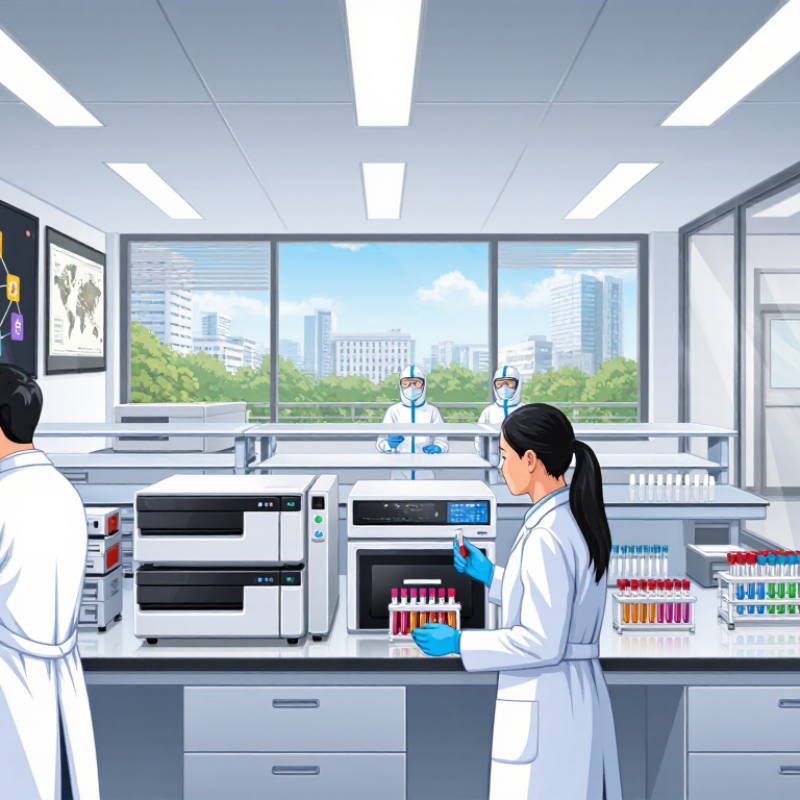
PCR gives public-health teams a fast genetic signal. A swab or blood sample is processed, then targeted DNA or RNA is copied and measured. For RNA viruses, a reverse-transcription step comes first. Results can help distinguish pathogens with similar symptoms and identify outbreaks before clinics see a clear pattern. The U.S. Centers for Disease Control and Prevention describes nucleic acid amplification tests as highly sensitive tools for detecting respiratory viruses. But a positive result does not always mean a person is currently infectious; timing and clinical context matter.
Sequencing adds detail. It reads pathogen genetic material, helping labs compare samples, track new variants, and spot mutations linked to resistance. The World Health Organization’s Global Genomic Surveillance Strategy 2022–2032 describes how millions of SARS-CoV-2 sequences were shared during the pandemic, supporting global monitoring of viral change. That scale mattered. It also exposed uneven access to sequencing and data systems. A rural lab may have a PCR machine but lack reliable reagents, trained staff, or rapid sample transport. Results can arrive late. Even sophisticated tools need careful interpretation: contamination, low pathogen levels, and sampling gaps can distort the picture. Molecular diagnostics are powerful, but they do not replace epidemiology or a clinician’s judgment.
| Method | What It Detects | Example Public Health Use | Public Health Contribution | Important Consideration |
|---|---|---|---|---|
| Conventional PCR | A selected DNA sequence, amplified so it can be detected. RNA targets require reverse transcription to make complementary DNA first. | Identifying a specific pathogen in a clinical or environmental sample when the target is known. | Supports diagnosis and targeted investigation of suspected infections. | Detects only sequences targeted by the assay; results depend on sample quality and test design. |
| Real-time PCR (qPCR) | A targeted DNA sequence during amplification; fluorescent signals are measured in real time. RT-qPCR is used for RNA targets after reverse transcription. | Testing for respiratory viruses such as influenza viruses or SARS-CoV-2 using RNA-targeting RT-PCR assays. | Enables timely case detection and can help public health teams monitor changes in test positivity alongside other surveillance data. | A positive result detects target genetic material; it does not, by itself, establish that infectious virus is present. |
| Multiplex PCR | Multiple predefined genetic targets in one test; RNA targets require a reverse-transcription step. | Distinguishing among several pathogens that can cause similar respiratory or gastrointestinal symptoms. | Can provide information on several likely causes from one sample, supporting surveillance and more focused follow-up. | The assay detects only the organisms included in its target panel. |
| Whole-genome sequencing | A broad genetic sequence from a pathogen. RNA-virus genomes are generally converted to complementary DNA before sequencing. | Comparing pathogen genomes during an outbreak, such as sequencing bacterial isolates to assess their genetic relatedness. | Can help identify related cases, track the spread of lineages, and detect genetic changes relevant to surveillance. | Genetic similarity alone does not prove direct transmission; results need epidemiological context. |
| Targeted sequencing | Selected genes or genomic regions, including regions associated with pathogen typing or drug resistance. | Investigating drug-resistance mutations in pathogens such as Mycobacterium tuberculosis. | Can inform resistance surveillance and help identify genetic markers that warrant further clinical or laboratory assessment. | A detected mutation may not predict treatment response on its own; interpretation depends on validated evidence and clinical context. |
| Integrated molecular surveillance | PCR results and sequence data combined with case, location, time, and other epidemiological information. | Monitoring pathogen activity, detecting emerging variants, and investigating possible clusters. | Turns laboratory findings into population-level evidence that can guide surveillance priorities and public health responses. | Interpretation depends on representative sampling, reliable metadata, timely reporting, and appropriate privacy safeguards. |
The World Health Organization estimated 10.8 million cases. About 8.2 million were newly diagnosed and reported.
Missed or late reports make it harder to see where transmission is occurring. Some communities may need support that data do not clearly show.
They can detect tuberculosis genetic material in sputum. Some tests also identify markers linked to resistance to key medicines.
Results may be ready about two hours after testing begins. Speed helps. Transport and laboratory workload can still add delays.
Not always. Moving a sample, processing it, and sharing the result take time. That gap is easy to overlook.
No. It may check for selected resistance markers, but additional tests can be needed. Clinicians interpret results alongside symptoms and other findings.
Collect the sample carefully and follow local handling instructions. Clinics should document results promptly and arrange clear follow-up.
Seek clinical review. One negative test cannot settle every case, and a wider assessment may be needed.
Molecular diagnostics help public health teams detect pathogens by identifying their DNA or RNA. Methods such as PCR can rapidly find genetic material in a sample, while sequencing can provide more detailed information about a pathogen and how it changes over time. Together, these tools support timely diagnosis, surveillance, and informed decisions about where to focus testing and health resources. In considering how can molecular diagnostics support public health programs, tuberculosis offers a clear example.
The World Health Organization estimated 10.8 million TB cases worldwide in 2023. Rapid molecular tests can identify TB and, in some cases, indicate drug resistance, with results available in about two hours. This can help health workers begin appropriate care sooner and strengthen case reporting. Drug-resistance monitoring is also important: WHO estimated 400,000 cases of multidrug- or rifampicin-resistant TB in 2023. Tracking these cases through molecular testing helps public health programs monitor resistance patterns and plan responses.

 BioX Medical