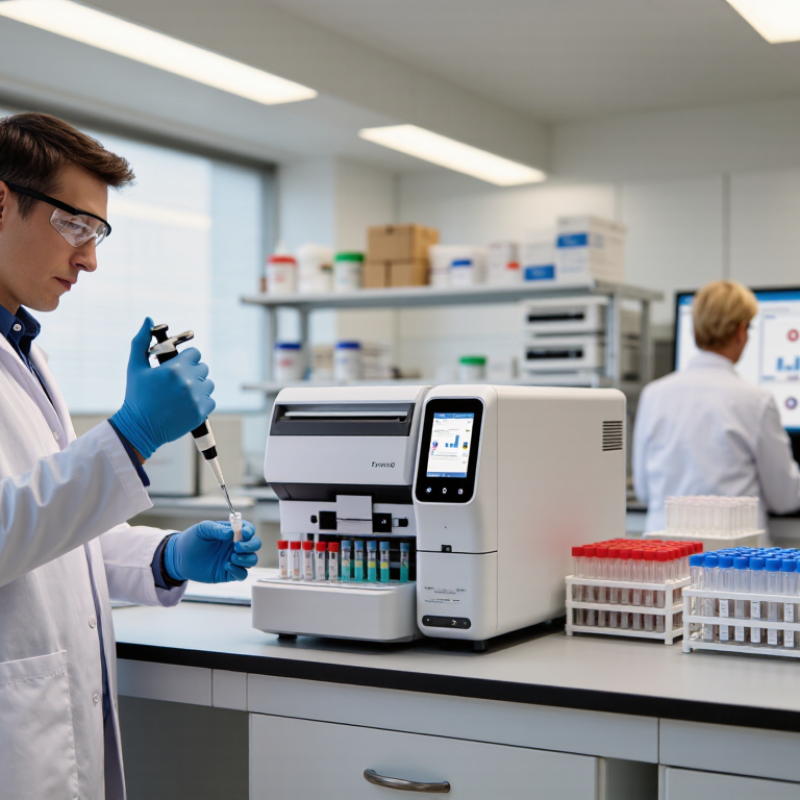
How to Choose a Molecular Diagnostic Analysis System?

Time:2026-10-05 Author:Isabella
0%

Choosing the right platform begins with a clear question: what is a molecular diagnostic analysis system? It is an integrated laboratory solution that processes biological samples, identifies genetic material, and reports clinically relevant findings. The system may combine sample preparation, nucleic acid extraction, amplification, detection, software, and quality controls. In a real laboratory, this can mean moving from a labeled swab to a verified result with fewer manual transfers.

Dr. David H. Persing, a recognized molecular diagnostics expert, has stated, “The value of a diagnostic test lies in its ability to improve patient care.” This principle should guide every purchasing decision. A fast instrument is not automatically the best instrument. Laboratories should examine analytical sensitivity, specificity, contamination control, internal controls, and result interpretation. They should also check whether the system supports their sample types and expected testing volume.

Workflow matters greatly. Imagine a busy bench at 7 a.m., with limited staff and urgent samples waiting. A system requiring repeated pipetting may create delays and increase handling risk. An automated, sample-to-answer design may reduce these pressures. Yet automation has limits. No platform eliminates the need for trained professionals, verification, maintenance, or thoughtful clinical interpretation.

The strongest choice balances performance, usability, total cost, service support, and future flexibility. Review published validation data, not only promotional claims. Ask how the system performs with difficult specimens and borderline results. Consider connectivity, cybersecurity, reagent stability, and regulatory requirements. Some assumptions may prove wrong after implementation. That is why a pilot evaluation, involving actual users and representative samples, remains one of the most reliable steps before commitment.

How to Choose a Molecular Diagnostic Analysis System?

Define the Purpose and Scope of the Molecular Diagnostic System

Before choosing a molecular diagnostic analysis system, define the exact problem it must solve. Will it support screening, diagnosis, treatment selection, or monitoring? Each purpose requires different targets, specimen types, detection limits, and reporting speed. A system designed for respiratory samples may not perform equally well with blood or tissue. That difference matters.

Describe the full testing scope before reviewing technical specifications. Identify the organisms, genes, mutations, or biomarkers that require analysis. Then map the workflow, from sample preparation to result interpretation. Consider daily test volume, operator training, turnaround time, quality controls, and data security. Experienced laboratories should compare claimed performance with independent validation data. Look for sensitivity, specificity, reproducibility, invalid rates, and evidence from real clinical settings. A clear report is essential. It should show limitations, not only positive findings. No system is perfect.

Tips: Write the intended use in one sentence. List excluded uses too. Define acceptable turnaround time and sample failure rates. Ask whether the system fits current staff, facilities, and maintenance capacity. Small details matter. During evaluation, document unexpected results instead of ignoring them. A test may appear efficient during a short trial, yet create delays when sample numbers increase. I have found that workflow fit is often underestimated. It deserves the same attention as analytical accuracy.

How to Choose a Molecular Diagnostic Analysis System? - Define the Purpose and Scope of the Molecular Diagnostic System

Evaluation Dimension Key Question Relevant System Capability Practical Selection Guidance
Primary Diagnostic Purpose What clinical or laboratory decision must the system support? Detection, qualitative identification, quantification, genotyping, mutation analysis, or antimicrobial-resistance testing. Define the intended use before comparing instruments. A system designed for pathogen detection may not be suitable for quantitative viral-load testing or broad mutation profiling.
Analyte and Target Type Which biological targets will be measured? DNA, RNA, microbial nucleic acids, human genetic variants, or multiple target classes in the same workflow. Confirm that the extraction chemistry, amplification method, detection channel, and software support the required target type, including RNA reverse transcription when applicable.
Specimen Types What sample matrices will be processed? Compatibility with specimens such as whole blood, plasma, serum, swabs, urine, saliva, tissue, cerebrospinal fluid, and respiratory samples. Check validated sample volume, transport medium, storage conditions, pretreatment requirements, and known inhibitors for each specimen type.
Testing Volume and Throughput How many samples must be processed per shift or per day? Batch size, continuous loading, number of analytical channels, automated sample handling, and scalability. Low-volume laboratories may prioritize flexibility and low dead volume, while high-volume laboratories generally need automation, larger batch capacity, and predictable workflow utilization.
Turnaround Time How quickly must a result be reported? Time from sample loading to result, including extraction, amplification, detection, review, and reporting. For urgent testing, evaluate the complete end-to-end workflow rather than only the instrument run time. Hands-on preparation and result verification can materially affect total turnaround time.
Analytical Performance Can the system reliably detect or measure the intended target? Limit of detection, analytical specificity, inclusivity, linear range, precision, reproducibility, and invalid-result rate. Review performance using the exact specimen types and target concentrations relevant to the intended use. Do not rely only on manufacturer-generated analytical data.
Multiplexing Requirements How many targets should be assessed in one reaction? Multi-target detection, internal controls, amplification channels, and software-based result interpretation. Multiplexing can reduce sample consumption and processing time, but each panel should be assessed for interference, cross-reactivity, target competition, and interpretive complexity.
Workflow Automation Which steps should be automated? Automated extraction, reagent dispensing, barcode tracking, plate setup, amplification, result analysis, and electronic reporting. Automation can reduce manual errors and hands-on time. Confirm whether the system supports the required level of walk-away operation and whether manual override procedures are available.
Contamination Control How will false-positive risk be controlled? Closed-cartridge processing, unidirectional workflow, separate pre- and post-amplification areas, aerosol-resistant consumables, and carryover prevention measures. For high-sensitivity amplification assays, select a workflow with strong physical and procedural separation of extraction, amplification, and product handling areas.
Quality Control How will run validity and assay quality be monitored? Internal controls, external controls, calibration procedures, lot tracking, trend analysis, and documented quality-control rules. Ensure that controls detect extraction failure, amplification inhibition, reagent problems, and instrument faults rather than only confirming signal generation.
Result Interpretation How are raw signals converted into reportable results? Automated thresholding, quantitative-cycle analysis, mutation calling, assay flags, invalid-result handling, and manual review options. Choose software that provides transparent rules, clear exception flags, audit trails, and appropriate review controls for borderline or inconclusive results.
Connectivity and Data Management How will results enter the laboratory information environment? Barcode support, user access control, audit trails, data export, laboratory information system connectivity, and electronic result transmission. Assess compatibility with existing information systems and verify data integrity, cybersecurity controls, backup procedures, and retention requirements.
Regulatory and Intended-Use Fit Is the system appropriate for the planned clinical or research use? Documented intended use, validated protocols, applicable quality-system documentation, and regionally relevant regulatory status. Confirm that the intended use, specimen types, patient population, and reporting claims match the applicable requirements in the operating jurisdiction.
Staffing and Training What level of technical expertise is available? Operator training requirements, maintenance procedures, troubleshooting support, and competency-assessment resources. Select a workflow that matches staff capability and laboratory coverage. A highly automated system still requires trained personnel for quality review and exception handling.
Total Cost of Ownership What is the full cost over the system life cycle? Instrument acquisition, reagents, extraction consumables, controls, calibration, maintenance, service, labor, waste disposal, and connectivity. Compare cost per reportable result, not only the purchase price. Include repeat testing, invalid results, downtime, consumable storage, and staff time.
Facility and Environmental Needs Can the laboratory support installation and routine operation? Benchtop space, electrical supply, temperature and humidity limits, network access, biosafety provisions, and waste handling. Complete a site assessment before purchase. Infrastructure limitations can affect installation time, uptime, workflow separation, and operating safety.
Scalability and Future Scope Will the system remain suitable as testing needs change? Expandable assay menu, additional modules, software updates, higher-throughput options, and support for new specimen types or targets. Document expected growth over the next several years and verify that expansion will not require disproportionate changes to space, staffing, validation, or data infrastructure.
Recommended Decision Sequence
Define the intended use → identify specimens and targets → estimate throughput and turnaround time → set analytical and quality requirements → assess workflow, connectivity, and infrastructure → compare total cost of ownership → perform verification before routine implementation.

Compare Core Technologies, Test Types, and Analytical Performance

How to Choose a Molecular Diagnostic Analysis System?

Compare Core Technologies, Test Types, and Analytical Performance

Choosing a molecular diagnostic analysis system starts with the core technology. Real-time PCR offers targeted detection, strong sensitivity, and familiar workflows. Isothermal amplification can reduce instrument demands and shorten processing time. Sequencing provides broader genetic information but usually requires more complex analysis. Each option has trade-offs. No system is perfect.

Match the platform to the test type and clinical question. A respiratory panel may need several targets in one sample. A blood-based assay may demand careful inhibition control and strict contamination prevention. Some laboratories value rapid results near patients, while others need high throughput for hundreds of specimens. Consider extraction steps, sample volume, hands-on time, and result interpretation. Small workflow details matter.

Analytical performance should be reviewed with evidence, not attractive claims. Check sensitivity, specificity, limit of detection, precision, linearity, and invalid-result rates. Examine data from different specimen types and realistic concentration ranges. A strong result on purified material may not predict performance in mucus, blood, or poorly collected swabs. Review external evaluations and quality-control records when available. Ask how the system handles internal controls and failed runs.

A fast result is not always a useful result. I would also compare maintenance needs, operator training, software clarity, and reporting consistency. These factors are sometimes underestimated. Even experienced teams can overlook user error during busy shifts. A practical evaluation should include real samples, repeated testing, and difficult edge cases. That is where weaknesses become visible.

Evaluate Sample Workflow, Throughput, and Laboratory Compatibility

How to Choose a Molecular Diagnostic Analysis System?

Evaluate the sample workflow before comparing instrument specifications. Map every step, from accessioning and preparation to result review and reporting. A useful system should reduce tube transfers, manual pipetting, and repeated barcode checks. In real laboratories, small interruptions often create larger delays. The World Health Organization’s Global Tuberculosis Report 2024 recorded 8.2 million newly diagnosed tuberculosis cases in 2023. This scale shows why dependable molecular testing must support both urgent samples and routine workloads.

Throughput is more than the number of results per hour. Examine batch size, loading flexibility, turnaround time, and recovery after a failed run. The system should match your daily specimen pattern, not an idealized peak day. WHO’s 2021 guidance on laboratory quality management stresses reliable processes, competent staff, and traceable results. Those requirements should shape the evaluation. A fast analyzer may still underperform if preparation remains manual or reporting requires duplicate entry.

Laboratory compatibility deserves equal attention. Check environmental requirements, network integration, consumable storage, contamination controls, and staff training needs. Review local quality records and run a pilot with representative specimens. Do not rely only on vendor demonstrations. A pilot can expose awkward handoffs. It may also reveal that projected throughput was too optimistic, which is uncomfortable but useful. The final choice should fit existing quality procedures, maintenance capacity, and clinical priorities, while allowing future assay expansion.

Assess Data Management, Quality Control, and Regulatory Compliance

How to Choose a Molecular Diagnostic Analysis System?

A reliable molecular diagnostic analysis system begins with disciplined data management. Look for controlled user access, automatic backups, traceable edits, and clear data retention settings. Results should move securely from instrument output to the final report. Review how the system handles failed runs, amended results, and duplicate patient records. A clean interface matters too. Staff under pressure can still make avoidable mistakes.

Quality control should be visible, measurable, and easy to review. Choose a system that records control results, flags unusual trends, and supports lot tracking. It should separate valid results from questionable ones without hiding the reason. Regulatory compliance requires more than a certificate. Check validation records, audit trails, electronic signatures, and documented change control. Requirements differ by region and test type, so involve qualified compliance and laboratory professionals before purchase. No system is perfect. Our assumptions may fail during a busy shift.

Tips: Request a live workflow demonstration using realistic samples. Ask how the system handles invalid results and downtime. Review one complete audit trail. Confirm data export, recovery testing, and staff training records. Keep evidence for every validation decision. Small gaps often become expensive problems later.

How to Choose a Molecular Diagnostic Analysis System?

A practical evaluation model should balance data management, quality control, and regulatory compliance before implementation.

The suggested weighting reflects commonly required laboratory-system capabilities: secure traceability and audit trails, documented quality control and result reliability, and validation and regulatory evidence. Adjust the weights according to the intended use, jurisdiction, and laboratory quality system.

Review Costs, Support Services, and Long-Term Scalability

Choosing a molecular diagnostic analysis system requires more than comparing purchase prices.
Grand View Research estimated the global molecular diagnostics market above 15 billion dollars in 2023, with continued growth expected. That growth can hide rising service, reagent, calibration, and training costs. Ask for a five-year total-cost model. Include installation, software updates, quality controls, waste handling, and downtime.

Support services deserve equal attention. A low-cost instrument becomes expensive when engineers respond slowly or training is remote and vague. The ISO 15189 standard stresses competent personnel, validated processes, and continuous quality management. Request documented response times, preventive-maintenance schedules, escalation contacts, and user-training records. Test the support process before signing. Call the service line with a realistic fault scenario.

Scalability is less visible, but more decisive. OECD’s Health at a Glance 2023 reported average health spending at 9.2% of GDP across OECD countries in 2022. Laboratories therefore need capacity without uncontrolled operating costs. Compare sample throughput, automation options, data integration, and expansion fees. Check whether the system can handle new assays without replacing its core hardware. A pilot using real samples can reveal bottlenecks that demonstrations hide. I would not trust a perfect spreadsheet. It rarely captures repeat testing, staff turnover, or delayed results. Build a conservative forecast, then review it every year.

FAQS

How should a laboratory evaluate the sample workflow?

Map each step from accessioning to final reporting. Count tube transfers, manual pipetting, barcode checks, and review points. Small interruptions can create long delays. The workflow may look efficient on paper, yet fail during a busy shift.

What throughput factors matter beyond results per hour?

Review batch size, loading flexibility, turnaround time, and failed-run recovery. Match capacity to normal daily specimen patterns. Do not plan only for peak demand. A fast system may still perform poorly when preparation remains manual.

How can laboratory compatibility be assessed?

Check space, power, temperature, network access, storage, waste handling, and contamination controls. Review staff training and maintenance capacity. Run a pilot with representative specimens. Awkward handoffs often appear only during real testing.

What data-management functions should the system provide?

Look for controlled access, automatic backups, traceable edits, and clear retention settings. Results should move securely into final reports. The system should manage failed runs, amended results, and duplicate records. A clean screen helps under pressure.

Which quality-control features deserve attention?

Choose a system that records control results and flags unusual trends. It should support lot tracking and explain questionable results. Review one complete audit trail. Hidden reasons create weak decisions.

What regulatory evidence should be reviewed before purchase?

Check validation records, audit trails, electronic signatures, and documented change control. Requirements vary by region and test type. Involve qualified laboratory and compliance professionals. A certificate alone is not enough.

How should the total cost be calculated?

Build a five-year cost model. Include installation, software updates, controls, calibration, training, waste handling, maintenance, and downtime. Repeated testing can quietly increase expenses. Our forecast may be wrong.

How can support services and future scalability be tested?

Request response times, maintenance schedules, escalation contacts, and training records. Call support with a realistic fault scenario before signing. Check assay expansion, automation options, data integration, and replacement costs. Perfect spreadsheets rarely show staff turnover or delayed results.

Conclusion

Choosing the right molecular diagnostic analysis system begins with a clear understanding of what is a molecular diagnostic analysis system and how it will support your laboratory’s goals. First, define the intended applications, target diseases, sample types, testing volume, and required turnaround time. Then compare available core technologies, test formats, sensitivity, specificity, reproducibility, and analytical performance to identify the most suitable approach.

A complete evaluation should also consider sample preparation, workflow simplicity, automation, throughput, and compatibility with existing laboratory facilities. Data management, result traceability, quality control procedures, cybersecurity, and regulatory compliance are equally important for reliable operation. Finally, assess the total cost of ownership, including equipment, consumables, maintenance, training, and technical support. A system that can expand with changing workloads, new assays, and future laboratory needs will provide greater long-term value and operational stability.

Isabella

Isabella

Isabella is a dedicated marketing professional with a sharp focus on driving brand growth and engagement through strategic content creation. With an extensive background in digital marketing, she combines her passion for storytelling with her keen understanding of industry trends to deliver......